How to choose security questions a stranger can't guess, but your family can
Most security questions are easy to look up. Here is how to write questions only the right person can answer, with good and bad examples and a quick checklist.
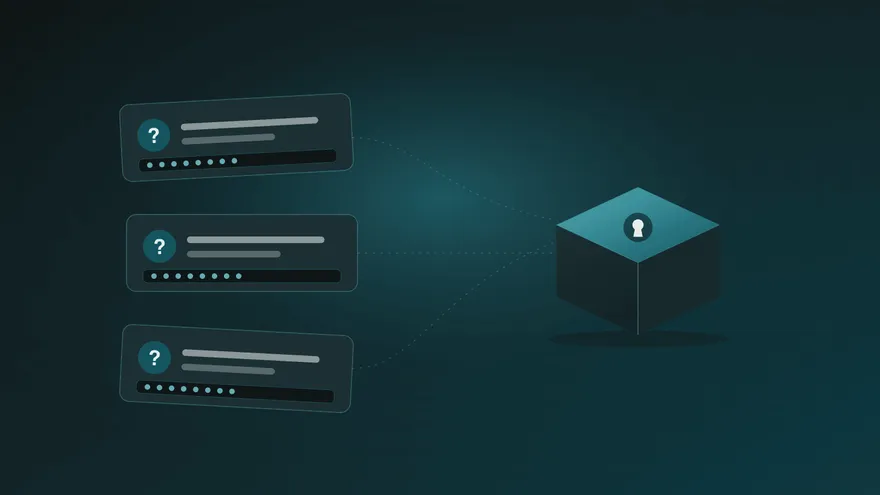
“What was the name of your first pet?” “In which city were you born?” We have all answered questions like these, and most of us know, deep down, that they are not very secret. Your birthplace is on your social profile, your pet may have its own photo album, and your mother’s maiden name is one family tree away.
A good security question works the other way round: easy for one particular person, close to impossible for everyone else. This guide shows how to write questions like that, whether for an account recovery form or for a Parcel Rocket parcel, where the answers are the key that unlocks what you left for someone.
What makes an answer easy to guess
An answer is weak when any of these is true:
- It is public. Anything on social media, in a CV, in a wedding announcement or in an old blog post. Schools, hometowns, employers and pets fall into this group.
- It has few possible values. A year, a month, a favourite colour, a number from 1 to 10, a common first name. A determined person can simply try them all.
- It is common. “Pizza” as a favourite food, “London” as a favourite city, “Max” as a dog’s name. Popular answers are the first ones anyone tries.
- Many people know it. If your whole office knows the answer, it is not a secret between two people.
What makes a question work
The best questions point to a shared memory that only two people have, with an answer that is specific and usually several words long.
- It is about something you did together, not a fact about you.
- The answer is not written down anywhere public.
- The answer will not change over time.
- Your recipient would answer it the same way, word for word, years from now.
Good and bad examples
| Weak question | Why it is weak | Stronger version |
|---|---|---|
| What is my mother’s maiden name? | Often public, and known to many relatives | What did Grandma always cook when we visited in winter? |
| Which city were we born in? | On social profiles and documents | In which town did our car break down on the way to the sea? |
| What year did we get married? | A small range of possible years | What song was playing when we left the reception? |
| What is our dog’s name? | Pets are all over social media | What did the kids call the dog when they were annoyed with him? |
| What is my favourite food? | A handful of common answers | What did we order on our first date, and what went wrong? |
Notice that the stronger questions do not just hide the answer better. They also feel personal, which makes them easier for the right person to remember.
Make the answers easy to type exactly
A question is only useful if the right person types the answer the same way you did. In Parcel Rocket, answers are compared exactly as typed, including capital letters, with extra spaces at the start and end ignored. So:
- Agree on a simple style. For example, all lower case, no full stop at the end.
- Avoid answers with several common spellings. Nicknames, transliterated names and dates are the usual troublemakers. If an answer could be written two ways, pick a different question.
- Give a gentle hint in the question. “Two words, lower case” at the end of a question costs nothing and saves a lot of frustration.
Use more than one question
Several questions protect better than one, because all of them must be answered correctly. Three good questions are a sensible default. Mix different kinds of memories, such as a place, an event and a phrase, so that knowing one part of your life is not enough to answer them all.
Will they still remember in ten years?
For a parcel that may wait for years, memory matters as much as secrecy. Choose moments that were important to both of you rather than small details, and avoid anything that depends on a number or a date. If you are worried, it is fine to tell your recipient that questions exist and what they will be about, as long as you do not give away the answers.
Parcel Rocket can also tell recipients that a parcel exists as soon as you create it, and you can print an access sheet with the link and a QR code to keep with your important papers.
A quick checklist
Before you save your questions, check each one:
- The answer is not on social media or in any public document.
- The answer has many possible values, not a year or a short list.
- Only you and your recipient know it.
- It will not change over time.
- It is several words long and easy to type the same way.
- Your recipient would remember it years from now.
If a question fails any of these, rewrite it. It takes five minutes, and it is what keeps your information private.
Not sure what to ask?
When you create a parcel, Parcel Rocket can suggest questions for you. Tell it who the parcel is for, such as “my sister” or “my business partner”, and pick the ideas that fit, then make them your own. You can start with a free parcel and see the whole process in a few minutes.